

Welcome to this blog post (a 4-minute read). In the audio version, two AI hosts “deep dive” into the article – it really is a fun listen! I hope you enjoy. Let me know your thoughts, comment below! Jan
Have you ever thought about how, in the digital world, the questions you ask shape the answers you get?
Yet, many misunderstandings about design and technology start with the wrong question, or no question at all.
At some time, I think we’ve all jumped straight to “Which app is best?” or “Why won’t this work?” without stopping to think about what we actually need (or want) to know.
Now, however, the ability to ask better questions, in both design and digital work, is more valuable than memorising shortcuts or mastering the latest tool. It’s a skill worth having!
When You Don’t Know the Word
Online, we have access to seemingly unlimited information. Yet “information overload” is common, especially when our understanding comes from snippets on social media or comments from friends.
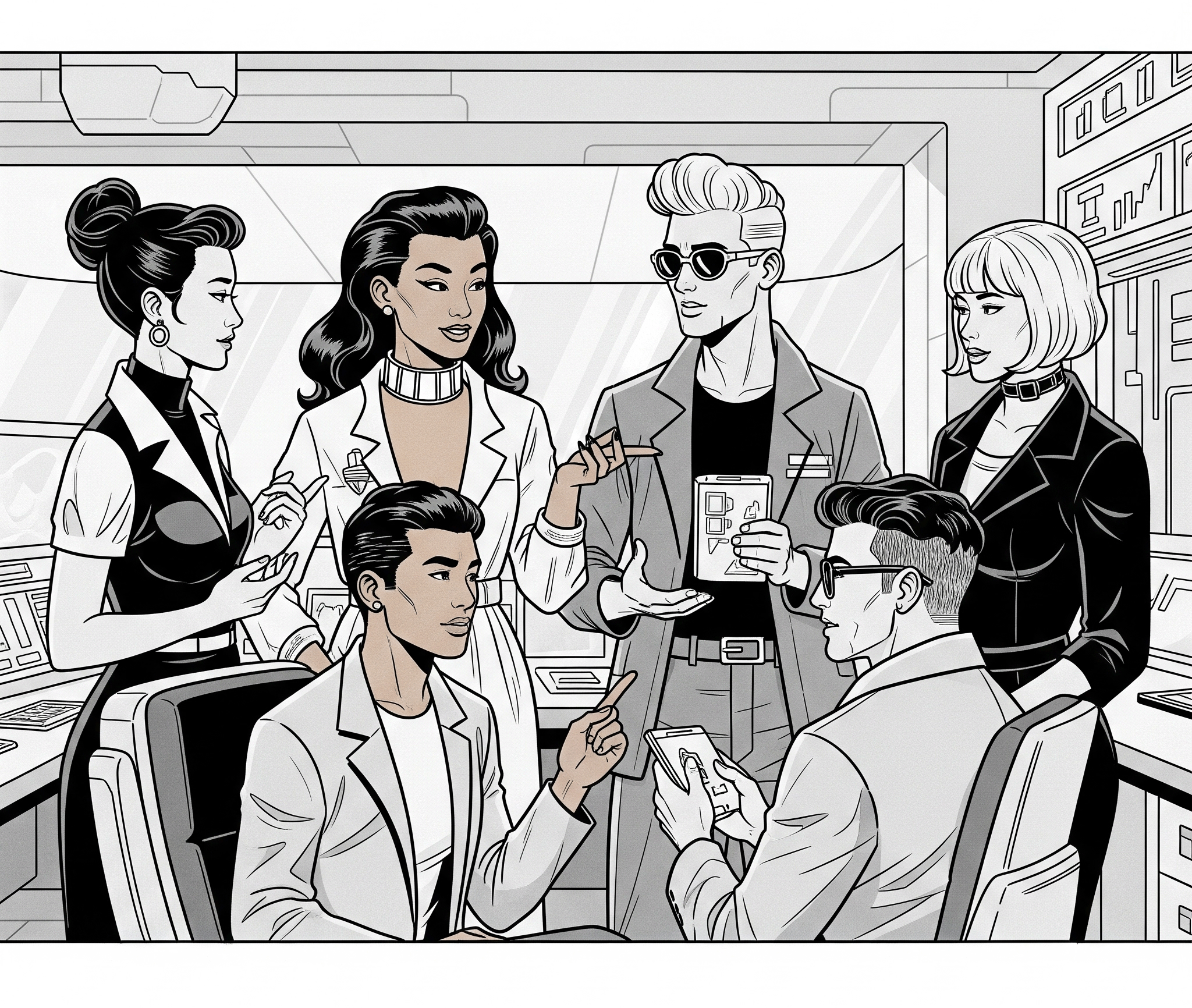
Have you ever been in a meeting where everyone seems to understand the discussion, but you don’t recognise the terms being used? You might assume you’ve “missed something“ and stay quiet. Even if you do ask, the answer might be too complex for a quick response, and you can feel people’s frustration at having to explain.
So, you listen, try to piece things together, and plan to look it up later. But assumptions can cause just as many communication issues as misunderstandings.
One barrier to asking questions is the feeling that we should already know. But what if a word is genuinely new for everyone?
Two “New“ Words
Recently, two terms caught my attention: Agentic AI and Vibe Coding. If you heard those in a meeting, would you know what they meant? I didn’t, so I got curious and asked.
Agentic AI goes beyond traditional AI (also called Narrow AI), which is trained for one purpose (think Siri) and doesn’t create anything.
Generative AI, like ChatGPT, can create new content but still depends on human prompts.
Agentic AI, or AI agents, can function without us. They make informed decisions based on context and instructions. You could assign a project and walk away. Think: self-driving cars — still not perfect, but you get the idea.
Vibe Coding was coined by Andrej Karpathy (computer scientist, co-founder of OpenAI, former Tesla AI lead). It describes telling AI what you want instead of writing code line-by-line, essentially “going with the vibes“ while the AI does the work. It appeared in the Merriam-Webster dictionary within a month and has a Wikipedia page. That’s how quickly a new language enters our lives.
These terms might never be relevant to your work, but knowing them gives you a starting point to ask better questions if they come up.

Why Questions Matter in the Digital Age
Digital literacy can be a minefield, and it’s not slowing down. Every action we take, from designing a slide deck to saving a file, involves decisions.
Better questions help guide better decisions.
It’s easy to lose confidence when the digital landscape changes so fast. But a slight shift in thinking, starting with what you really need to know, can make a big difference.
How to Ask Better Questions
This isn’t about being a ‘tech person’ or a ‘creative’. It’s about adopting a thinking pattern. Here are four steps that may help shift your mindset and guide you in asking better questions.
-
Why are you asking? What do you actually need to know?
-
What’s the purpose? Frame your question around your end goal.
-
Who will it impact? Consider your audience or collaborators.
-
Where will it be used, seen, or stored?
The Undervalued Skill
Instead of asking “What’s the best font?“ consider asking yourself first, “Who’s going to read this, and how will they see it?”
If you have a blurry image, instead of asking “Why is my image blurry?“ a better question might be “What resolution do I need for this format?”
If you’re unsure which app to use, try rephrasing the question to “What’s my real goal here?“
If you are frustrated with a digital file that won’t open, instead of saying, “Why won’t this file open?“ ask, “Where is it stored, and in what format?”
Make Curiosity a Habit
At the heart of both design clarity and digital literacy is a curiosity-first habit, with tools second. In workplaces that are evolving faster than we can keep up, knowing how to ask better questions isn’t just useful, it’s becoming essential.
So next time you face a design or digital challenge, pause. Reframe. Then ask. Make it a skill you practice. Add it to your resume! You might be surprised where it leads.
Thank you for reading. Do you have any questions? 😀
Until next time,
Jan


xx